Last Tuesday morning, I sat at my kitchen table, sunlight streaming in, trying to read the ingredients on a cereal box. I held it close, then farther away, squinting and tilting my head. "Can you even see that, honey?" my husband asked, a hint of concern in his voice. I sighed, frustrated. "Not really," I admitted. "It's just a blur." This was my daily reality, a dance with blurry text and aching neck muscles, all because my glasses prescription OD never felt quite right.
For years, getting glasses felt like a gamble. I'd walk into an optical store, spend a small fortune, and walk out with hope. But more often than not, that hope quickly faded. I remember one time, I had two pairs of glasses on order. My first pair, meant for computer work, was fine. But the second pair, progressive lenses meant for everything else – reading, computer, even night driving – was a total disaster. I had to tilt my head up and down constantly to find a tiny sweet spot of clarity. It hurt my neck, strained my eyes, and made everything look distorted. The upper part for distance caused double vision, and the reading section was so low and narrow, it was practically useless.
It was like I was stuck. I needed glasses that could handle all distances, not just one. I even went back to the store, hoping they could fix my glasses prescription OD, but the experience was awful. The new doctor was rude, insisting I "learn to use progressives" even when they clearly weren't working for me. He rushed me out, and I ended up with two pairs of computer glasses, effectively wasting a huge chunk of money I’d spent on promises of "full range" vision.
Another time, I tried an online store. They offered big promises and even bigger store credit if they messed up. Guess what? They messed up, repeatedly. Three blurry pairs later, and I was out hundreds of dollars, forced to take their frames to a local shop to get new lenses put in. It felt like I was losing not just money, but also my patience and trust. I missed out on vision benefits because of their delays, and their customer service became a maze of excuses.
Verdict: Don't settle for blurry. Your vision is too important to compromise on quality or customer care.
I was almost ready to give up on progressive lenses entirely, thinking they just weren't for me. But then, during one of my desperate online searches for "glasses that actually work," I stumbled upon Mozaer Optical. Their story was different. They focused on delivering quality and clarity, especially for those of us needing multifocal solutions. I spent hours researching, looking at real buyer photos and reading reviews, determined not to fall for another empty promise.
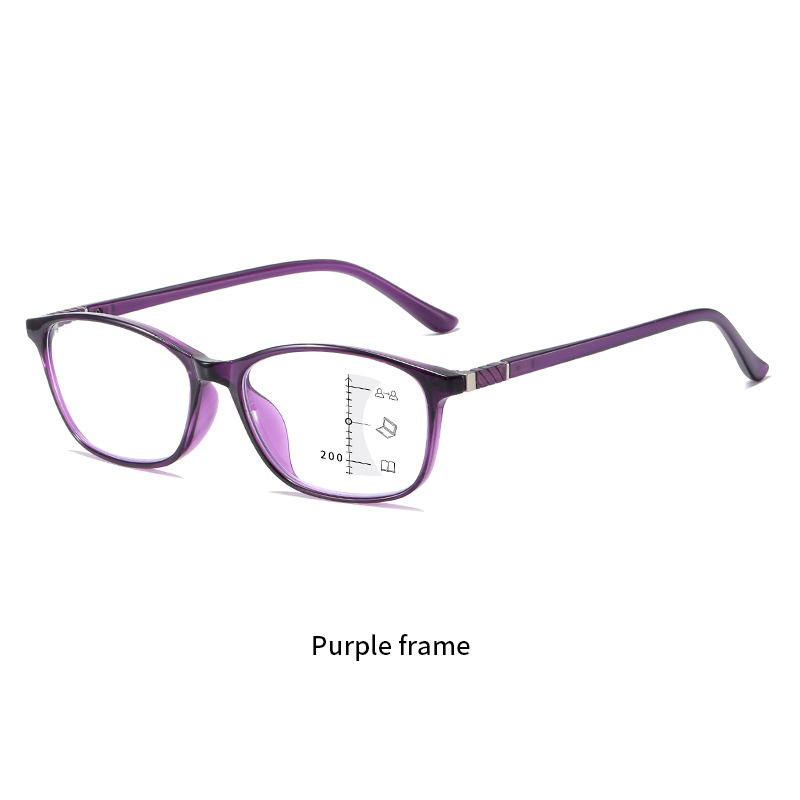
What caught my eye was the Elbru Multifocal Progressive Reading Glasses Ultralight Anti Blue Light Presbyopic Eyewear Women Men Reading Eyeglasses 0+1+2+4 +250-PURPLE. It promised progressive vision without the extreme head tilting and narrow fields that had plagued my past experiences. The price was surprisingly reasonable, which made me a little wary at first, given my history of "you get what you pay for" disappointments. But I learned that a reasonable price doesn't always mean low quality; sometimes it means a brand cuts out the middlemen and focuses on what truly matters: effective lenses.
Action Step: Always research. Look for brands that focus on quality lenses and check real buyer feedback to understand the actual product performance, not just marketing claims.
The first day my Elbru glasses arrived, I was nervous. I put them on, braced for the usual distortion and neck strain. But instead, I saw... clarity. Everywhere! The viewing areas for distance, mid-range (like my computer screen), and reading were so much wider and smoother. I didn't have to bob my head up and down like a confused pigeon. This was the progressive vision I had always hoped for, a true game-changer for my glasses prescription OD.
The ultralight frame felt barely there, and the anti-blue light feature was an unexpected bonus. My eyes felt less tired after long hours in front of screens. It was like someone had finally understood what I needed in multifocal lenses, without making me feel like I was the problem for not adapting to faulty glasses.
Verdict: Good progressive lenses should adapt to you, not the other way around. Look for wide, seamless transitions between focal points.
A week later, I noticed just how much my new glasses had changed my daily life. Here are a few moments that really stood out: